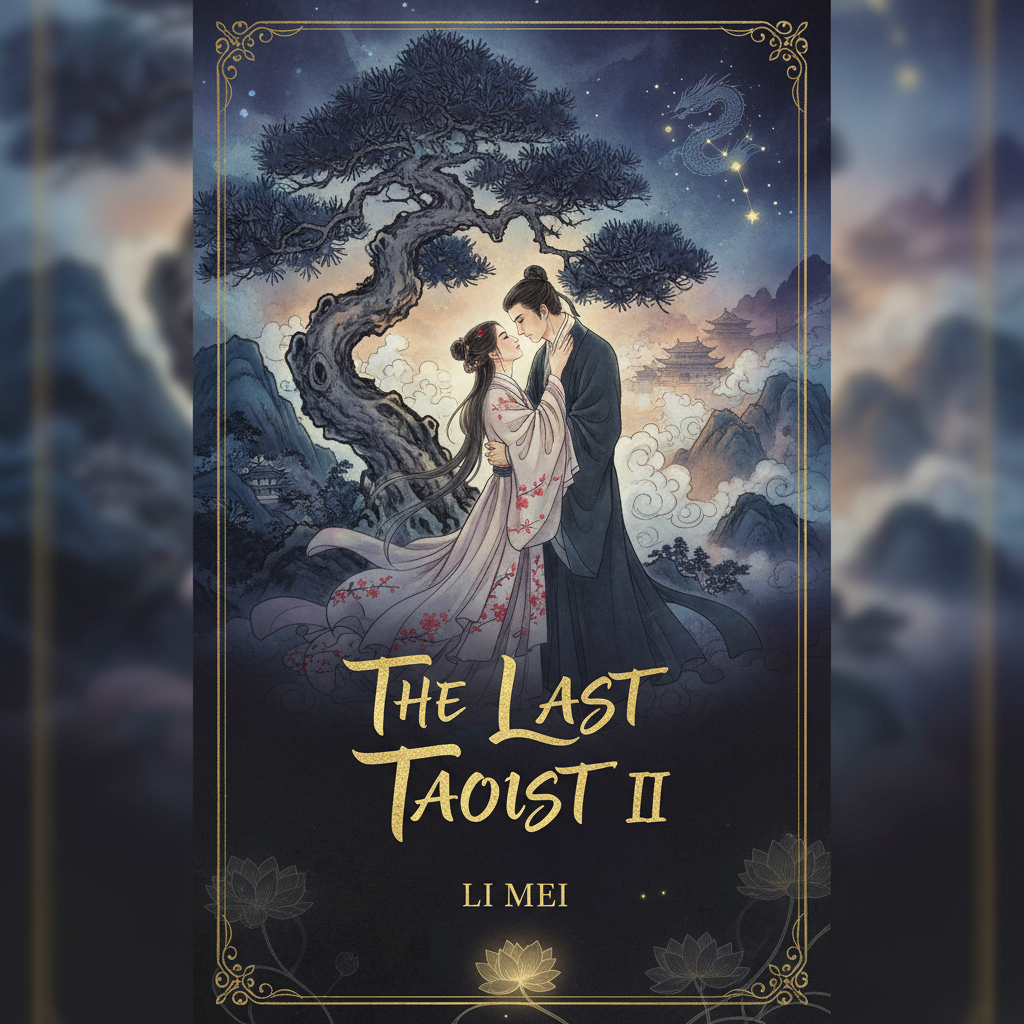
The Last Taoist II
Note: This book, also known as "Tales of the Taoist Order," is a major New Year release in the "The Last Taoist" series.
The Last Taoist II
In the spring of 1960, the drought that had persisted for more than a year showed no sign of abating. In a small village in northwest Zhejiang, home to about a hundred families, the fields had long since turned into expanses of yellow earth, cracked and dry like flaking pine bark. The river had vanished, the crops had failed the previous year.
This place was called Hong Village, its origins lost to time, and most of its inhabitants were refugees who had fled famine from various regions during the late Qing and early Republican eras. The tales and histories of the original villagers were long buried beneath the earth. At the entrance of the village stood an old archway, supported by two stone pillars as thick as water barrels, each resting atop a stone beast.
People of the time had no knowledge of the legends behind these beasts; they simply called them “old tortoises.” Upon their backs stood the pillars, and above them hung a stone plaque engraved with a bold character: “Hong.” Thus, the village was known as Hong Village.
Newcomers with strength would choose plots of land, occupy a house, and settle with their families, bringing seeds and tools to take root. Some came from the interior, others from the coast, from Anhui, Henan, or Jiangxi. In those days, people sought food and peace, and wherever those were found, they stayed. My ancestors originally hailed from Anqing in Anhui; from my great-grandfather’s generation, they escaped to this place and became villagers of Hong.
No one knew when Hong Village was founded, nor what had transpired here.
📚 Related Recommendations
View More >